I feel encouraged to discover that many people share my sense of what has happened in 2020 and what we need to do about it. I wrote about it last week.
My friend, Michiko, wrote this on her Facebook page
Don’t be lulled. 70 million people still voted for racism, homophobia and white terror. The work is only now begun. We must heal the spiritual wounds wrought by genocide and slavery, which as Dave Chappelle likes to say “was only 3 people ago” or we will repeat this process. [SNL this week] I like this message [below] because it’s been resonating with what I believe God is saying to me which is…throw spiritual water on the fire, speak the history back to the earth, let her absorb it and reconfigure it and put out the flames of hatred, human classification and human division. This is the work I feel called to do.
I think all of us probably have some variation on her calling. Can we all agree to:
Throw spiritual water on the fire?
Live in creation and not in our classifications and divisions?
Three things that can happen as a result of misplaced faith.
1) If our faith is not in God, we are putting ourselves in danger.
Jeffrey Epstein put his faith in money and political connections, but it did not save him.
Young people put their faith in their health but Covid-19 kills people as a result.
Symbols are not God. Applying your ignorant ways harder in hope of a better result could be deadly.
2) Premature celebration can attract attention that invites even more challenges.
Trump declared victory before the votes were counted. He stirred up opposition.
Democrats advertised some radical plans and invited opposition.
Moving in silence is often better. Let your character and actions speak, not just your advertising.
3) Results of our misapplied faith are often much worse than we needed faith to address.
Plenty of pastors asserted that Trump would win easily. Paula White, one of the president’s spiritual advisors, has become famous for her televised prayer for Trump’s God-ordained victory. The parodies of it abound. As a result, the church becomes a joke and evangelism becomes very difficult. People feel like Christians are crazy.
Be careful in public.
I think it is a good time in the history of Eurocentric Christianity to finally listen to historically marginalized people and hear what they have been saying all along. Now that mostly a bunch of old “white” men have spent hundreds of millions of dollars on an inconclusive election it is time for the church to return to Jesus. We can get over Donald Trump, Paula White and our lust for power (from political conservatives clear to revolutionaries) and come up with what Jesus wants to come up with.
It is still all there in the Bible:
It is living water poured on the fires of hatred.
It is the stones crying out for the restoration of shalom in creation.
It is faith in God and not all the others things empire-lovers cherish.
Like Michiko and Spencer say, the work is beginning. Let’s get reoriented now that the results of all our societal nonsense are becoming clear. The church will survive and we will carry the seeds of transformation into the new territory we are entering. The Spirit of God will not abandon us.
Yesterday I spontaneously decided to remove the last vestige of our two-month sojourn upstairs at Circle Counseling South Broad. It is a blessing to have one’s own private homeless shelter, when needed. Our house sold and we needed to move out. The contractor at our new place had to be fired because the contract reached its six-month end and no finish was in sight. Chaos, Covid-19 and anxiety ensued.
Now that we are a couple of months settled in our new place, which was somehow finished, infection-free, under exemption from lockdown restrictions, we are feeling better. So I felt enough energy to drag our old mattress to the street for disposal and take apart the bed frame in our former shelter.
All the time I was doing that I was on a deadline and few of my errands were working out as planned. For instance, the libraries reopened, but not the one to which I was headed. The next closest one at 59th and Baltimore did, however, face the glorious front yard above. By the time I was putting away my bed-removal tools, I was getting a bit nervous about navigating around whatever road closures I would encounter on the way back to more screen work. But the Lord shows up in remarkable ways — in a way that I find profound enough to share with you even though my blog is on hiatus. It is my own little parable.
For some reason I had a little plastic container of pins in my tool box at the counseling offices. As I hurriedly reassembled the items in the tray I hit the container and it fell to the floor, scattering pins everywhere. I just sighed and thought, “Of course.” But as I bent down to hold the dust pan, I thought, “You need to slow down and be more careful.” It was my mother popping up to provide her instruction! Once the pins were in the dust pan, I took the lid off the trash can and there was no liner. I thought, “See. We think ahead and stay prepared because we are going to need things later.” There was my father!
I went over to the open door where the lone therapist in the building was typing. I told her my tale to affirm our work with clients when they have inner voices from their parents stuck in their brains. My voices were amusing. They were only a bit shame-inducing — I did scatter pins everywhere, after all! They are probably stuck under the baseboards and ready to gravitate under bare feet that shouldn’t be uncovered to begin with and likely to contract tetanus — or so my inner parent would predict. I told my colleague about what I named “the wisdom from the plains” and she said, “Rod, Stuff happens.” It was the wisdom from the city!
I love the Lord’s parables. They are about everyday life where we are most likely to see the glory of God. They are so profound and so well-considered over centuries that they all have many layers of meaning. I have been pondering my little parable ever since it came to a pleasant ending. My friend tried to comfort me and release me from my shame.
Jesus might tell it in just a few lines. The kingdom of God is like an old man dropping pins from his toolbox. As he swept them up, the voice of his parents came to him, scolding him for his haste and carelessness. When he spoke of this to his younger friend, she led him to not care at all. “Stuff happens,” she said. But he went away rejoicing over the transcendent love that peeked through the clouds of their wisdom.
My friend’s encouragement might have been the best thing to offer when I was much younger and definitely run around by my shame. I felt like I was in charge of making sure nothing wrong happened. And I did fail at that quest every day and didn’t want my inner parents or my true self to know about any of it. But at this point I am more amused than anxiety-ridden when mom and dad show up randomly. And as I look back on the pin drop, I actually miss them more than resent their intrusion into my thoughts.
The traumatizing move and project, the sojourn in the upper room, wrestling the mattress to the street, dropping the pins and having loved ones, past and present, older and younger, interpret the moment all happened in Christ. All were touched with love, if my ego was porous enough to receive it. As it turns out this time, it was.
In 2016, John Lewis led a sit-in on the Senate floor to demand common-sense gun-control. He did not get what he wanted, but he never gave up. And he never gave up his remarkable love as he did it.
I watched almost all of his funeral last Thursday. I was repeatedly moved by the saint being honored in Martin Luther King’s church.
I even praised George Bush
I was flabbergasted by George Bush’s tender speech. In the spirit of John Lewis’ “love first and let the rest follow” Christianity I ventured a rare Facebook entry to be amazed about Bush. I just felt like saying something not-quite-nice-but-good about a man about whom, Lord knows, I have said about a million extremely negative things. I was taken up by the way of love.
I am not sure how people found this FB entry, since they did not comment on my next entry about St. Ignatius (who has plenty to criticize, as well). But they countered my little love with quite a bit of hate for Bush. In their defense, the bombers who flew over my Facebook page were probably just standing up for what they believe in. I think they were trying to make sure George Bush was not exonerated by being likable, which is his go-to. I did question their love, but they also reflect my hero in their stubborn refusal to give in to the lies that are destroying the beloved community. I’m not sure they are building such a community with their judgment, but at least they are on some frontier shooting at its enemies.
The better way of John Lewis
John Lewis had a better way and it made me cry to hear about it, even from George Bush. Lewis let his little light shine right to the end. When he knew he was dying, he asked the NYTimes to print his final words, and they did. Obama essentially riffed on Lewis’ exhortation in his eulogy. Here’s part of his parting words:
I heard the voice of Dr. Martin Luther King Jr. on an old radio. He was talking about the philosophy and discipline of nonviolence. He said we are all complicit when we tolerate injustice. He said it is not enough to say it will get better by and by. He said each of us has a moral obligation to stand up, speak up and speak out. When you see something that is not right, you must say something. You must do something. Democracy is not a state. It is an act, and each generation must do its part to help build what we called the Beloved Community, a nation and world society at peace with itself
I have no faith in the American state. And I think democracy based on capitalism is absurd. But I do know what Lewis is saying when he says “beloved community.” And the fact that he wouldn’t give up until the godless American government reflected it is beautiful. I have given myself to a much smaller goal: that the church of Jesus Christ would be a beloved community that contrasts with the world as it demonstrates the heart of its alternativity. One would think I have a much easier row to hoe than Lewis was given. Some days Facebook mocks me for my hope, but I don’t think we should give up. Lewis didn’t:
In my life I have done all I can to demonstrate that the way of peace, the way of love and nonviolence is the more excellent way. Now it is your turn to let freedom ring.
When historians pick up their pens to write the story of the 21st century, let them say that it was your generation who laid down the heavy burdens of hate at last and that peace finally triumphed over violence, aggression and war. So I say to you, walk with the wind, brothers and sisters, and let the spirit of peace and the power of everlasting love be your guide.
I wish he would have mentioned Jesus in there. But MLK and his crew did not want to leave anyone out — and everyone is made in the image of God, after all. Their relentless love and their nonviolent pressure had core values that everyone could understand, whether they were committed to Jesus or not. I think it is clear that their values require resurrection power to implement and sustain, since John Lewis died in the same year as George Floyd. But ascending into generous inclusion is a lot better than the usual descent into our present hate-filled particularity.
Thank you Jesus for John Lewis and thank you John Lewis for being Jesus among us. I hope people listen to you even more, now that you have received a lot of media attention. The church should lead the way to truth and justice as it lets love guide it. In Across That Bridge: A Vision for Change and the Future of America, Lewis said:
“It was no accident that the movement was led primarily by ministers—not politicians, presidents or even community activists—but ministers first, who believed they were called to the work of civil rights as an expression of their faith.”…“Religious faith is a powerful connecting force for any group of people who are working toward social change.”
I am grateful for his example. Love is the way. As he demonstrated, it didn’t even matter if the society changed, since it did, but it also didn’t. Self-giving love will always be the core value of the way of Jesus no matter what we face next, right up to the end.
A few days ago I was talking to Eliza Griswold. She is writing a book about Circle of Hope — along with other churches on our wavelength and the future of the Church in general. She was recording me.
When we got to the part about turmoil in our church (there is a little), which makes for a better book, after all, and turmoil in the larger Church (there is quite a bit), I looked at the phone for a second. “Am I going to say something dumb?”
I took a deep breath. Our turmoil is all for the best. Most of the controversies we face are about causes that should cause turmoil. Some of them are either over the tipping point or about to go over the tipping point into full scale change, which would be worth a lot of trouble. For instance, a school in Virginia just got a name change from Robert E. Lee to John Lewis last week – so things could be looking up (and I mean looking “as God sees things” in the case of that school, not IMO).
Eliza lamented in her inquisitive way about some of the strident discourse she was hearing in our church. It scared her, since she is well acquainted with church controversy. She tagged the young ones as responsible for most of it, I think (I didn’t record her). And the phrase “social justice warriors” seems like it was used, although I’m not sure either of us said it. The angry-sounding, division-threatening dialogue made her wonder if we would even survive! So she wanted to hear what an old head like me would say about it.
I told her (I guess she could check the tape about this) I thought old people should be the last to judge the young. My job is to help everyone get into a sustainable stage in their faith so they are not run over by the deceitful world – otherwise, what is the point of walking with Jesus for 50 years — so young people can look dumb in comparison? People don’t start where they end up, even if they think where they are now is a fine achievement. I want to affirm their achievements and help them get into what is next, since none of us is going to stop developing, in one way or another. It was something like that.
Janet Hagberg and her inspiring books
Janet Hagberg
Janet Hagberg is all about development and she has been influencing me again, lately.
When I was in my twenties I heard Janet Hagberg speak. As I recall, she was testing out some material she was collecting for how to implement James Fowler’s seminal work on the Stages of Faith: The Psychology of Human Development and the Quest for Meaning. Later on I read Hagberg’s book Real Powerand it made so much difference to me, I basically installed it in Circle of Hope. I was so impressed with Real Power, I went back and read James Fowler, the basis, which was tough but productive sledding. After that, I laced the “stages of faith” into most of my thinking about growing in faith: I put it in workshops, I blogged about it, and I engineered a version of it, with the pastors, that became the outline for the Way of Jesus site – when you go to it you’ll see me ready to talk about the stages of faith right there on the intro page.
Just lately, I found a book that had been languishing on my selves for a long time, undiscovered, until I took it out of a packing box to reshelve it. It was Hagberg’s book The Critical Journey: Stages in the Life of Faith. God drew her into a deeper rendition of Real Power later on in life. Real Power was for the corporate world; and though spirituality is present, it isn’t focused on Jesus, per se. The Critical Journey is for Jesus followers (and anyone who wants to follow along with them). I think she might say this book “ruined her life” – at least it “ruined” the previous life that was headed for success in the corporate world.
Instead, Hagberg became a spiritual director and a mentor to many disciples. Last week I wrote to her with a question about the spiritual stages inventory in her book and she wrote back! That was unexpected, as it always is for me when a hero notices me. (That desire to be seen might be why I always get so choked up when cast members in the Disney parade break ranks to come over and wish my grandchild a “magical birthday”). I am pondering whether to accept her invitation to travel with a small group she is forming for next year as a means for spiritual development.
Time to grow and time for social action
I was fresh from reading The Critical Journey when I sat in the heat with Eliza (who has a Wikipedia page BTW). And she was wondering about what twentysomethings would do to the church. I started formulating my feelings into a theory in their defense.
I think young people should get involved with the power struggles of the world to express their undeserved powerlessness (stage one) and fully explore the energizing experiences of exercising power in stage two. Many derisively-labeled “social justice warriors” are criticized for being one-way know-it-alls who will cancel someone who does not agree with them. People do dumb stuff at every stage of life. I think stage two people often act like they know it all because they just learned a huge amount of meaningful material that is forming their future. Unlike a lot of burned out old people, they think life is important and they are going to make something out of it. Any twenty-something who is not on some bandwagon in the name of great causes should catch up. Their cohort is fueling some wonderful development in themselves and the world, whether they know what they are doing or not!
The observations of the stages of faith usually place most twentysomethings in stage two of their adult development, as humans, but also as people of faith.
One of the main characteristics of people in stage two (whenever they get there) is finding meaning in belonging. They may like a denominational way of being the church, but they are more likely to attach to a local church, and even within that church they are most likely to find a small group of people to whom they belong. Pastors may not like this, but that’s how people are. The group shapes our identity, we find power in association with others.
No one comes out fully formed, so in stage two people connect to a leader, a system or a cause, sometimes many before they zero in. The sense of enlightenment from sharing the leader’s/author’s/system’s wisdom is intoxicating. The same experience can be found by having a cause be the leader and not a person. A sense of being right, now that they have found the right stuff, often breeds a feeling of security –- which can sometimes come off as too secure, and exclusive of others who aren’t at the same place, or stage.
Calling something a stage implies that we are moving through it. Thus Hagberg calls our development a critical “journey.” People can get stuck in stage two for a number of reasons. The major reasons are
They get rigid: legalistic and moralistic. When someone complains about getting taken out by a “my way or the highway” SJW I can acknowledge the danger of people acting that way, but I am just so happy they have gotten far enough in life to find something outside themselves to care about! Audacity is underrated.
A sense of belonging can end up with being part of a closed, paranoid, “us against them” group. America, in general seems to have regressed into this trap,
A group can end up not being as attractive as expected so people can keep switching groups and doing the same thing over and over. They don’t move forward, just move around.
People who have been injured in groups, especially in churches, can spend a lifetime searching for a group that won’t hurt them. They need to move inward — that was the invitation when the leader, group or theory proved faulty, instead they blame the group and move on to have a similar experience, quite often, in the next one.
How does one avoid getting stuck in stage 2 or get unstuck? Moving on usually means becoming a producer instead of a product. When it comes to life in Christ, that movement is sort of inevitable. People joke that if you have a good idea in Circle of Hope, you’ll probably end up in charge of it. That’s not necessarily so, but maybe it should be. We formed cells and teams so people could be in charge of something and grow up in faith. Jesus wants friends, not slaves who only do what they’re told. In Ephesians 4 Paul tells us not to be infants, but grow up into Christ!
A lot of us find this need for development satisfied at work and in our own family. That’s where we take on responsibility and produce something – like offspring, a mortgage and profits for the company. The movement from Stage 2 to 3 in the Spirit is deeper. Women risk to be valuable. So-called minorities insist they matter and deserve a voice in the dialogue. Young people seek responsibility the old guard thinks they don’t deserve. We discover our gifts and are moved to enact them. We rejoice in the fact that we can develop and become all we are called to be.
I rejoice. I vividly remember being in stage two. At that time in my life, a 70something elder in the church I was serving took me aside one day and said, “Rod, you have great ideas, but you have terrible PR.” He went on. I listened to him. But I essentially thought, “The hell with PR! I don’t see Jesus taking cues from his media advisors!” I was right, but I later realized that I wanted to build something, not spend my life rebelling against what someone else built. I got some new skills, eventually. I’m still grateful for people like Janet Hagberg and that fed-up elder who cared enough to open up the possibility of development in critical ways — in both the positive and negative senses of that word.
The metaphor for my life this week has been scraping the mineral deposits off my new counters in my newly-rehabbed condo. We noticed when the light shines just right we can see stuff left on the counter we just wiped off. Come to find out, if we leave water or juice to dry on the counter, it will leave a crust that cannot be dissolved by a cleaner! One of the ways to be rid of it or diminish it is to scrape it with a razor blade. Some advisors say, “Just get used to it (and have a life, already!).” So far, I guess I am not the “get used to it” kind of guy. I’m scraping, and meditating as I do.
Now that the nearly-year-old rehab project and move is nearing some finality, I am finding some blessed room for feeling my post-transition life. Scraping my counter is an activity that slows me down and teaches me lessons. I’ve been scraping paint residue from floors and now mineral deposits from counters and it feels like my soul is getting a good scrape, too.
Failures like mineral deposits on my soul
It feels like a failure to have mineral deposits on the brand-new counters! Quartz is expensive. Finding out quartz is not really indestructible hurts. It all begs a lot of questions: Why didn’t I read everything on Google about quartz counters before I messed them up? Did I buy substandard stuff and get ripped off? Did I saddle myself with a maintenance job I will never do? Am I just the world’s worst consumer and should have stayed on a lower level of American household splendor, since I can’t get enough obsession going to take care of things?
I was telling Rachel last week that my life seems like a series of failures. I feel like a poster child for Falling Upward at times. My spiritual gift might be getting myself into trouble, or in over my head, or in a situation that will require reconciliation at best or miracle at worst. As I scrape the counter I have a familiar choice: am I going to meet Jesus on this counter or get back to him when I feel a little better after fixing the problem? – if that ever happens.
Scraping my life has also been a meditation on race, like for many of us these days. I have certainly been committed to failing at racial reconciliation in many ways since I moved to Philly. My dried up relationships are like mineral stains on my past. In a certain light they make me wince a little.
The passing away illusions of the perfect present
While I am scraping the counter I am tempted to damn the counter and condemn myself for having one. “Why did I buy this nice thing to oppress me, anyway?” I have a very strong inner Franciscan. The other argument goes, “Why are you worrying about scraping the counter? Just do it. Be in the moment of this scrape. Or don’t scrape and be there.” That’s the side that usually wins (thus this blog post).
We were talking over successes and failures the other night with some friends (with whom we were not successful at social distance, so I’ll add “catching Covid-19” to my failure list, shortly) and began to ponder the reality that we can’t understand the next stage of our development, spiritually, until we get into it. The tipping point moment of development usually feels like we’re in the fog, upended, even headed in a wrong direction. The future feels like an illusion, maybe even an apparition – something to be feared. Sometimes we get so scared we won’t even go, even though we are ready for what’s next.
Scraping my life right now feels like part of that kind of foggy transition. I begin to see the deposits on my counter like deposits of the past on my soul, dried up relationships that feel like scars, dried up work that left a mark, memories of goodness that are fading. For some reason, the old slogan of the much-maligned Robert Schuller keeps coming to my mind. He used to preach “turn your scars into stars.” The illusion of the perfect counter and successfully buying just what I want in a new home is a new scar in the night sky of my development. Every time I look at that counter, and myself, in a certain light, I need to get saved.
Gratitude really is the beginning and end of seeing clearly
I am scraping, scraping, scraping my condo, which was supposed to be all perfect long before the pandemic started. It is tempting to have my only prayer be, “Oh my God!” That is a prayer in the spirit of, “Now what?” as if I were Job, or something – albeit a Job scraping in his high rise looking out over a shining city. Eventually, my loving friend, Jesus, gets down on the floor with me, or sits at a barstool fingering a water stain and says something like, “Isn’t it great you are healthy enough to do this?” or “Remember that pilgrimage we took to Africa and were invited into some homes?” If I resist temptation, my prayer graduates to “Thanks.”
Gratitude is a good scraper. I keep talking about my recent experience with some wonderful people in my small-group “hub” connected to the Jesus Collective. The getting-to-know-you time was a blessing. One of my takeaways from our first meeting, however, was to get a better picture of the church in which I live. The leader of our group offered us some of the recent development in his spiritual life to use in our prayer together. It was a nice gift and I used it. But it was at a level I thought our pastors and all of our Leadership Team, maybe most of our cell leaders, had probably surpassed. I shouldn’t compare people, but I thought I knew maybe thirty people in our church who were much better prepared to lead this “hub,” which was culled from great people from all over the world! Like Paul, the “scales” fell from my eyes — the dried-up residue of not seeing my situation with a Jesus lens (or maybe seeing it with a Covid-19 lens). I was grateful. Maybe I should say I was reduced to gratitude.
Even pop stars tell us they are learning gratitude. It is not just a cliché; gratitude makes everything better. If we are grateful, we exercise humility and don’t fall prey to the dark side of our reality: the hubris of autonomy and rapacity of greed. Some time ago, I decided to start every day in my journal with a list of thanks. It is often amazing how hard it is to settle in to the blessings of my life. Often, especially in the depressing time of the virus, I need to force myself to see the wonders in and around me. I try not to wait for Jesus to open my eyes, or for the weight of creation to tip my scales. I need to be honest about what I feel. But I also need to be honest about what God feels. I need to go through a process of confession and restoration. But I also need to learn how to do that in the presence of Love, with trust and hope. Dwelling on the good with gratitude is a very effective soul scraper.
I think I’m learning. How are you doing? Got any scraping going on in your territory? Or what is your metaphor of the week? I would love to hear some more of your story about how Jesus is leading you through your troubles.
Next month the pastors are calling the church to consider our “rule” of life as followers of Jesus. You might like to pick up Ken Shigematsu’s book, My God in Everything, and start reading now. I love it when postmodern people rediscover ancient patterns to grow healthy faith. They give me hope for the world. And we could use some hope right now.
Americans are having a tough time living by any rules at all when it comes to the pandemic. As usual we’re dividing up over something as simple as whether wearing a mask is necessary. I know what I am about to say might not be true about you (at least I hope not), but as a society, the individual freedom to kill seems to be trumping our responsibility to save. As a society, the Americans perfected the world’s largest killing machine — their arsenals and armed “services;” I don’t think anyone would dispute that violence is a core characteristic of the U.S.A. But that trait characterizes the people as individuals, too. The society is debating whether policing means the right to make split-second decisions to kill Black people, especially, and whoever else challenges state-sponsored violence. We’ve been debating whether everyone should be allowed to carry weapons into Walmart. The wild Mixed Martial Arts (MMA) is more popular in the U.S. than the NHL or NASCAR among 18-34 year-olds. All this goes to say that Americans lean toward lawlessness when it comes to relating to anyone but their small circle, and white people, especially, tend to think death is “collateral damage” when it comes to protecting their way of life.
Contrary to Disney’s decision to open Disney World, the coronavirus crisis is not over. But some things have changed. To start, lockdowns are ending because cases are low or falling in some areas or because state leaders decided to move ahead despite the risk. Testing has increased, giving us more indicators of community health. Plus we know a lot more about how the virus behaves, how to treat it, and what activities pose the highest risk.
Since life on permanent lockdown isn’t sustainable, public health experts are beginning to embrace a “harm reduction” approach, giving people alternatives to strict quarantine. These options — like forming a “bubble” with another household or moving social activities outdoors — don’t eliminate risk, but they minimize it as people try to return to daily life. We need to have some new rules about how to go about the week.
Nobody knows exactly what will happen as communities open up. The most likely scenario is that virus cases will continue to surge and fall around the globe for the foreseeable future. In the middle of that uncertainty, churches, in particular, are dividing up over when it is safe to do things in person (as are thrift stores and counseling centers!). Will our church and its enterprises survive the pandemic? Will our friends and children know more about harm reduction strategies than Jesus in a year?
Jeremy Cohen, right, first approached Tori via drone, during self-isolation in their respective Brooklyn residences. Then he donned a bubble so they could hang out in person.
5 rules for life in the pandemic
It is a blessing that Jesus can hold your hand as you figure out harm reduction. It seems we have learned to live with masks and social distancing, as well as new rituals of hand-washing after handling packages and touching surfaces. We need some basic rules to minimize risk and still have a life going forward. Here are some ideas for the church culled from public health leaders [thanks to Tara Parker-Pope] that might give us tools to make our own decisions about being the church in person.
We need to know the present health of our state and community
Gwen and I are considering a trip to Vermont in the fall. When I started researching places to stay, I was informed there was a criteria for entry into the state. I would need paperwork to prove I was not infectious and sign a self-certification! That was sobering. Philadelphia county does not presently make the cut for numbers of cases allowed in one’s home territory to prove I am not too great a threat to Vermont.
To gauge our risk of coming into contact with an infected person, we need to pay attention to two important indicators of Covid-19 in our area : the percentage of tests that are positive, and the trend in overall case rates [Philadelphia] [SouthJersey]. When the percentage of positive Covid-19 tests stay at 5% or lower for two weeks, that suggests there’s adequate testing to mitigate transmission and you’re less likely to cross paths with the virus. The lower the number the better, of course. Right now PA has a 5.4 rate but Philadelphia County has about 1500 active cases compared to Vermont’s sense that 400 is the mark to meet.
We need to decide the extent of our “corona bubble”
After three months of being locked up together (or alone!), the safety zone of our apartments or family circles is driving quite a few of us “mad.” We’re widening our circles to include the extended family and friends. The prime minister of New Zealand started calling this extension a “corona bubble.” Now we need to agree on safety guidelines for our bubbles. The arrangement requires a high level of trust and communication.
Some cells are already experimenting with being a bubble and negotiating the level of social distance their meetings require. More anxious members want to know the number of “leaks” their bubble has — such as trips to the store or office, play dates, children and teens who see friends, or housekeepers and nannies who may visit multiple homes. Others don’t really care, or are unaware of the dangers.
Communication is the key to these arrangements working out. If a person is not going to face instant judgment about leaks they are less likely to hide them. Our activities are going to change all the time — schools are on the way to reopening, there should probably be more protests. So our arrangements need to be flexible. Is the church important enough to us to learn how to have this level of dialogue? Or will we wait and see what we’ve got when the powers-that-be sound the “all clear?”
We need to think of ourselves as managing an “exposure budget”
During a pandemic, every member of the household should manage their own exposure budget. (Think Weight Watchers points for virus risk.) You spend very few budget points for low-risk choices like a once-a-week grocery trip or exercising outdoors. You spend more budget points when you attend an indoor dinner party, get a haircut or go to the office. You blow your budget completely if you spend time in a crowd.
The initial crisis response is over, if some states ever had one, and we’re moving into long-term management. There is a lot of work on a vaccine. But it is unlikely to be ready by January, even if people keep promising it. We need to have a long-term plan about how to limit our exposure and still have a life. Gwen and I want to see the grandchildren. But it might make sense to stay away from Home Depot as a trade-off. It makes sense to go over the week and assess what the budget should be and how many risks we are actually taking.
We need to keep higher-risk activities short
We need to be together and will be together again. Let’s not forget. Until then, we are blessed with any number of ways to connect: phone, the dreaded Zoom, the now-expensive Marco Polo app, email – and people used to write letters and feel close to people at a distance. Budget in connecting, however possible or inadequate, before depression makes you even more isolated.
When you are going out into some risky territory, it might be a good rule of thumb to ask, “If an infected person happens to be nearby, how much time could I be spending with them?” It takes an extended period of close contact with an infected person, or extended time in a poorly ventilated room with an infected person, to have a substantial risk of catching the virus through the air, it is said. Keep indoor events brief. For a few more months we can move social events outdoors. Wear a mask and practice social distancing. Here’s some guidance about time of exposure.
Brief exposure:Brief encounters, particularly those outside — like passing someone on the sidewalk or a runner who huffs and puffs past your picnic — are unlikely to make you sick.
Face-to-face contact: Wear a mask, and keep close conversations short. We don’t know the level of exposure required to make us sick, but estimates range from a few hundred to 1,000 copies of the virus. In theory, you might reach the higher estimate after just five minutes of close conversation, given that a person might expel 200 viral particles a minute through speech. When health officials perform contact tracing, they typically look for people with whom you’ve spent at least 15 minutes in close contact.
Indoor exposure: In an enclosed space, like an office, at a birthday party, in a restaurant or in a church meeting, you can still become infected from a person across the room if you share the same air for an extended period of time. There’s no proven time limit that is safest but it is best to keep it less than an hour. Even shorter is better. We went to Michael’s to get some framing done the other day then I was appalled that my 70-something brother went to get a haircut! I find it difficult to figure out what is appropriate! Dr. Erin Bromage suggests we consider the volume of air space (open space is safer than a small meeting room), the number of people in the space (fewer is better) and how much time everyone is together (keep it brief). His blog about timing and risk has been viewed more than 18 million times.
Circle of Hope’s mapping process is helping us decide how we want to live as the people of God in a pandemic. If you read every link in this post, your personal decision might be better informed. But I doubt you would be certain about what is the right thing to do. As the Bible teaches us so well, our behavior is going to be a mixed bag and we’ll need to accept one another. Read Romans 14 and 15 again and learn to accept the one who stays quarantined too long and the one whose behavior seems to risky. I am learning to accept that I am at risk as an older person (albeit a fairly healthy one) and I might die. I have friends my age who have already survived an infection, but I am preparing not to survive, as well. Businesses and churches are in the process of dying. It all feels terrible. But along with physical risk management, I am also managing the spiritual risk I am facing. I will live forever, but I would like to be living that eternal life now, not when the pandemic is over.
Unfortunately, we need to keep up the precautions and make some rules
I’m surprised how many disparaging remarks I have heard about Florida this week. (Well, half of them might have been from me). My friends skipped their beloved month down south (but my pastor went south to enjoy the tropical storm!), since the whole state decided the President had the power to declare the whole pandemic a hoax. Thus, they are setting infection records.
Here’s the common sense about precautions, so far:
Keep your mask handy. Wear a mask in enclosed spaces, when you shop or go to the office and anytime you are in close contact with people outside your household.
Practice social distancing — staying at least six feet apart — when you are with people who live outside your household. Keep social activities outdoors and keep indoor activities brief.
Wash your hands frequently, and be mindful about touching public surfaces (elevator buttons, hand rails, subway poles, and other high-touch areas). Gwen put hand sanitizer in my van, since I touch my face all the time.
Adopt stricter quarantine practices if you or someone in your circle is at higher risk.
When will precautions allow us to “open” the church? Actually, if you have any decent theology at all, you know the church is open 24/7 if it is filled with God’s Spirit. We can’t be closed because we are it. But it sure would be great to have meetings and to serve people face to face in the community! We need each other. We don’t know how to do more than online meetings, at this point (so don’t miss them!!).
But before we start thinking about when to get in a room together (or outside, as we might), would you start thinking about how Jesus wants to you take care of his church? What rules your life? What is your rule of life – the desires and disciplines that form your behavior and fill your schedule? Your rule matters more than ever to protect our lives and our church. We need each other to take some precautions in regard to our tender faith — our own and one another’s. We are not subject to the pandemic in such a way as it defines us – that is, not really. We need to help one another get through this with our faith, hope and love intact, not just our bodies.
The pandemic makes everything more clear. As Pentecost promises, the old men and the rest of us are dreaming dreams. Daughters and sons are prophesying and seeing visions.
The unraveling United States is spawning a new social order which I pray is more just as we ponder and protest George Floyd, smothered before our eyes by powers cloaked with impunity while the unimpeachable president eggs them on. Even deeper, the church, denuded of its meetings and routines by the virus, is forced to look at itself in the mirror, naked, and consider whether it will pick up the radical mantle required in the next era.
I’ve been pondering the metaphor of “taking on the mantle” for quite a while, since our church decided I should bestow mine on our pastor team in an incremental and deliberate way. Even more, I have been watching clients and friends struggling to feel comfortable in the spiritual and psychological clothes they are wearing in this tumultuous time when we rightly suspect we will never get back to whatever “normal” was.
It seems strange to me that I just recently noticed how the Bible regularly records people using the symbol of the mantle/cloak/robe to mark the life-change a person is making. In the Bible, taking on the mantle marks the special character or gifts someone is called to offer in a time of trouble. Now is that time.
Pictures of taking on the mantle
You may have these pictures of being enrobed from the Bible already collected in your mind, but I think they bear repeating – at least I’m trying to feel them like a tongue of fire wrapping me in possibility.
In Genesis 37 we meet Joseph at seventeen, the same age I experienced my crisis of faith. His father, Jacob/Israel, loved him “more than any other of his children, because he was the son of his old age; and he had made him a coat of many colors.” This robe caused Joseph lots of trouble. I can relate. The “coat” my Father gave me in Christ, has also caused me trouble, along with joy like Joseph’s as I was also called to feed people in our famished world.
In 1 Kings 19 right after Elijah defeats Jezebel’s prophets and hears the voice of God up on the mountain, he receives a vision to anoint his successor. It says he “found Elisha son of Shaphat, who was plowing. There were twelve yoke of oxen ahead of him, and he was with the twelfth. Elijah passed by him and threw his mantle over him.” These wild prophets wore a distinctive cloak of animal skins, which John the Baptist adopted later on. They both struggled with terrible leaders and did their best to keep the knowledge of God alive among people under pressure. Someone may have tapped you to do more than plow; maybe it was God.
Return of the Prodigal Son (1878) by Edouard De Jans (1855-1919)
Then in Luke 15 Jesus uses the symbol, as well. When the prodigal son returns home, what does his father do? “The father said to his slaves, ‘Quickly, bring out a robe—the best one—and put it on him.” I feel delighted, if also unworthy, to wear my robe. I consistently meet people who can’t put it on, or who chafe in the false robe they wear, or who long for the parental experience of the Lord’s parable to cleanse their blocked or stunted feelings like fire.
I would never pretend to systematize these Bible readings into a principle of mantle-receiving or pretend I know all they mean. But I do feel them, and I think we can wear our new clothes in Christ with some confidence. Today I feel like I’d better make sure I’m receiving my robe and wearing my mantle.
Put on the new self
The New Testament is full of the image of being clothed with newness. Paul calls us to remember we are clothed with Christ. Our new relationship with God is like being born naked into the world again and given the mantle of our mentor, Jesus — a distinctive robe that communicates how much our Father loves us. Paul shows many facets of this gem of truth but I’ll just mention two.
Clothed with new creation. Paul teaches, “For while we are in this tent, we groan and are burdened, because we do not wish to be unclothed but to be clothed instead with our heavenly dwelling, so that what is mortal may be swallowed up by life” ( 2 Cor. 5:4). This is a great reading for Pentecost, since the whole scene of Acts 2 is a picture of the disciples being swallowed up by life.
As the powers force people into the arms of virus in order to protect the interests of the corporations, I think the whole world may be finally fed up with facing the ravenous exploitation that comes with the materialist worldview they’ve been sold. We’re all like Jesus now, in that the powers would auction off our clothes if they could find a way to get them off us. People can’t escape the sense there is a “heavenly dwelling,” or at least can’t overlook how the present is terribly flawed. So we are yearning, like Paul, for the new creation. [Ever watch the The Robe? Victor Mature helped show it to me].
Clothed with a new character. The story of Pentecost continues in Acts 2 and the whole book, to show that once touched by fire, the new church immediately expresses their new life with new behavior. Paul sums up the change like this in Ephesians 4: “You were taught, with regard to your former way of life, to put off your old self, which is being corrupted by its deceitful desires; to be made new in the attitude of your minds; and to put on the new self, created to be like God in true righteousness and holiness.” We always hear a challenging voice somewhere inside us saying, “So what are you going to do?”
These days the challenge is even more urgent. For many people, this year is the first time they have experienced real danger in their lives. Previously, it has been easier to live behind the walls of the American Empire. This uncertainty has caused them to see how many people have experienced trouble every day their whole lives. As a result, more people are reading the Bible as more than moral guidelines they could apply to their situation. They see it for what it really is: a guidebook for being an alternative to the evil and madness. As Paul tells the Romans, who live in the belly of the Roman Empire beast, “The night is far gone, the day is near. Let us then lay aside the works of darkness and put on the armor of light.”
So what do we have to do to wear a Jesus “mantle?”
Given what we face right now, knowing it is too large to look at it specifically and too unknown to make unchangeable plans, what do we do to take up the mantle and live into our new selves? In Christ we are a new creation and live according to a renewing character. If we want to live out this new life, what do we have to do? I don’t know for sure, when it comes to you, but here is what I have been thinking.
Take it on. — New life in Christ does not just happen to us, we take it on like a coat, we receive it as a gift, we conform to it like a person shipwrecked on a foreign shore adopts the local language. The disciples were waiting for the gift of the Holy Spirit. The day of Pentecost did “happen” — but they had to wear the newness. Joseph had this knack as a teen; maybe you did too. Even after he infuriated his brothers with his dreams and was thrown into a pit, he kept at it the rest of his life.
Nothing in the Christian life is singular, so we need to take on this character as the church, too. The body of Christ is not happening without us, but we are not happening without it, either. I think my appreciation for us sometimes blinds me to what Jesus is really calling us to be. For instance, I just said it “takes all of us” to be the church. But I know I’m talking to a small fraction of us right now and most people manage to never “take on” Circle of Hope and our unique calling in a meaningful way. Imagine how lively we will be when we all take on the mantle — we’re amazing as the fractional picture we are!
Take the time. – This daunting world seems like an even more urgent project right now than it always is. But, to be honest, I am who I am, with a limited amount of goodness to express. What’s more, I rarely know just what to do in a given day; I need to listen to God and others — and that takes time. I’m an organism who decides, not a decision that gets expressed organically. Elisha had the authority, but it took time for people to accept it. After he hit the Jordan River with Elijah’s cloak and parted it, people took notice. But even then, it is surprising how much resistance he got. Don’t give up.
Nothing happens instantly in the church, either. We’ve taken a long time to build who we are at this point. We tried to build in flexibility so we would be ready for anything that came along; and I think we are facing what came along pretty well. But we’re always frustrating someone because we are not yet all we ought to be. Perhaps they see the future so well, they have trouble relating to people who aren’t there yet. Sometimes it feels like we really shouldn’t take the time to “sit around” waiting for something to grow. But I think the message is that we really don’t have another option.
Trust your spiritual instincts. — The prodigal son famously came to his senses. We assume the dutiful son in the story eventually did too, but Jesus leaves that as an open question for his listeners: “Are you going to come to your senses and join the party?” For most of us, the answer is, “Yes. I’m feeling bad, but I definitely want to come.”
Right now, I think we are wondering who we are going to be and what we are going to do next as individuals and as the church. That is, we are wondering if we are just waiting to get back to normal or if this is our chance to trust our best thoughts and desires. Almost every day when I pray, the temptation to wait until it is all over presents itself. Am I going to put on my new self and live, or am I just going to wait until it doesn’t seem so necessary to do that?
Some things have been reinforced for me that I think should be characteristic of us as a church if we are going to offer an alternative to this uncertain and frustrated world. My spiritual instincts keep telling me, in spite of my resistance, to
Embrace first and trust God to bless the best I have to give as well as trust God to work out the worst that can happen. I want to fearlessly love.
Jump in and figure out how to do it rather than getting all the ducks in a row before proceeding. Actually ducks instinctively get in line because they automatically follow their mother’s voice. I want to stop asking so many questions as if I deserve an answer. I know enough to get started.
Be frank instead of doubting every word until caution eliminates creativity. I want to ask for forgiveness rather than avoid needing to ask because I avoid trusting people. I can’t control all the troubles I imagine. We need more truth and less fear.
Live with a Jesus-lens instead of being whatever you are against. The world needs to live in Christ as a result of Jesus living in the world. Following Jesus is always a self-giving, creative act, not an argument about what right living means.
I’m trying to trust what I hear just like the first disciples had to wake up the day after Pentecost and live new lives. Will these kind of character traits lead us to wear the radical mantle needed in this era? I hate to wait and see, but I will have to do that. And I imagine I could write more tomorrow after I learn what God and you teach me next.
Whether you are a psychotherapist, a worship leader or a loving parent, the new brain science has good news for you. Those seemingly indelible memories that haunt us from our youth to old age are not as permanent as we thought. We can cooperate with God, who provides us transforming, mismatching experiences, and hope to bring healing and new life.
At the recent CAPS Conference, I kept hearing about a book that has people talking: Unlocking the Emotional Brain by Bruce Ecker, Laurel Hulley, and Robin Ticic. They assert that intense emotions generate unconscious predictive models for all of us. These models tell us about how the world functions and about what caused those intense emotions. We don’t question them, just react to them as the brain uses those models to guide our present and future behavior. When we experience discordant emotions and feel stuck in irrational behaviors they are likely generated by these implicit “schemas” (models for how the world works) which we formed in response to various external challenges. These mental structures are ongoing, working descriptions both of the problems that move us and the solutions we have accepted.
According to the authors, the key for updating worn-out and often-troubling schemas involves a process of memory “reconsolidation,” which can be verified by neuroscience. They claim our more conscious emotions are usually locked out of the area of the brain where more basic memories reside, like the ones that form our predictive models for the world. But once an emotional schema is activated, it is possible to simultaneously bring into awareness knowledge contradicting the active schema. When this happens, the information contained in the schema can be overwritten by the new knowledge.
What this means is that people who are trying to help troubled loved ones can help create different, healing experiences and hope people can change. If we have mismatching experiences that contradict what we have previously experienced, new models can be formed. This science validates what most Jesus followers know. We can experience transformation that goes against the fatalistic sense of indelible identity and inevitable destiny that colors so much of the popular imagination of humanity these days. For instance, the trailer for Assassin’s Creed. [Warning: violence]
If you don’t want to just go with your ancestral memory for assassination, you can hope your pastor (or therapist, or friend) can be present enough and perhaps creative enough to provide or affirm an alternative experience. We’re not alone, flawed, stuck or doomed!
We need mismatching experiences for deep change
It is tempting for Christians to “humbly” allow their words or their programs to serve as a stand in for their personal and relational cooperation with God’s Spirit. But people need more than logic that only hits their upper brain. They need real, live experience of goodness and love they can see, then feel and then integrate. In brain-science laden psychotherapy talk: You can’t throw words at the limbic system. I often shorten that to “don’t should on me!”
What we need in order to reconsolidate those intractable memories are “mismatching experiences” that allow our schemas to be contradicted in a good way and reformed in line with new experiences. This is one reason God did not send a book to us, she came personally in Jesus to provide many such experiences that don’t match the experiences which subverted our memories, and that is why Jesus left the body of Christ to create an environment for an alternative process – because transformation takes place deeply in such an environment.
You can see Jesus creating mismatched experiences repeatedly, notably with the Samaritan woman at the well (John 4). When he begins to make a relational environment with her, he starts in a dependent position to make a connection and quickly manages to touch the shame that is basic to how she sees herself in the world. She stays with him and enters into a surprising intimacy across racial and gender lines – she calls him a Jew, then a prophet and eventually “sir.” Her mismatching experience reaches a peak when Jesus notes what she has done but stays with her, unlike all her husbands and all the people who have left her alone fetching water at noon.
John later teaches from this experience: “If God loved us like this, we certainly ought to love each other. No one has seen God, ever. But if we love one another, God dwells deeply within us, and his love becomes complete in us—perfect love!” (1 John 4). We experience transformation at the level we need it. Our good thinking alone rarely seeps into the places we need to experience the love of God and so rarely makes us people who begin reacting according to a new model of love.
Our worship can be a transforming environment
I am mainly writing to encourage pastors and the rest of us Jesus followers who want to cooperate with the transformation of humanity. One thing cooperation means is that worship should be a mismatching experience, not a lesson, and should mainly be focused on the present, not function in reference to the past or future. Our times of worship are hardly the only places we create an environment for transformation, but they are certainly a good opportunity!
All too often true of our worship experience
Unfortunately, our worship is often not a mismatching experience. It is often not hitting our emotions at all, but is stuck in the upper reaches of the brain. So it has little hope of getting to the deep seated schemas that reside close to the spinal cord. Ironically, we had a decent example of brain-bound worship in the CAPS Conference itself. A very talented man from Charlotte (I believe) led us in a song we also sometimes sing in our worship times called Build My Life led by Pat Barrett with the Housefires, originally from a church network centered in Atlanta. [Here’s a link if you are not familiar.]
I do not mean to insult the integrity of anyone who wrote or uses this popular song. They probably mean well and appear to be good-hearted Jesus followers on screen. I would just like to tweak their lyrics to provide for a present time, real experience of God-with-us, rather than a mental process in line with our self-protective schemas.
Worthy of every song we could ever sing Worthy of all the praise we could ever bring Worthy of every breath we could ever breathe We live for You
The lines above seem more like a statement of identity formation than worship.
“I am naming your traits.
I live for you.
That’s me.”
That process of self-identification is what the song is mainly about. It is a bit akin to the Assassin’s Creed — an ancient-seeming fictional set of rules bent on creating a freedom that never quite arrives.
The lines of the song could be a statement of having been transformed if we were not then led to sing:
Open up my eyes in wonder And show me who You are And fill me with Your heart And lead me in Your love to those around me
This seems like the song of a “buffered self” (see description in this post) singing from the inside of their painful impermeability. This is not a real time experience, yet: “Open me up. I need to see you.” It might be better to sing
“I open my eyes in wonder
and see who you are.
I am filled with your heart
and see the fields white for harvest.”
Those tweaked lines would be more suitable for entering a mismatched experience in which we are not far away or alienated from God, but are one with Jesus. Being honest about our needs and feelings is good, but singing about ourselves in worship might be more matching worship with our schemas than being transformed. So many of us are in a perpetual state of aspiration, more interested in making a choice, once our eyes are opened to the options, rather than accepting our invitation to enter into spiritual reality. If we were the woman at the well talking to Jesus, we might keep arguing instead of relating to who is with us. The song goes on to repeat, like a mantra:
And I will build my life upon Your love It is a firm foundation
So many Evangelical songs are in this future tense, for some reason. Making a promise is a good thing. And the promise above is a great place to stand. But making it in worship may not provide the mismatching experience in the present that unlocks the memories that form the schemas of the person who is singing the song. It is something that will happen in the future, apparently. I found myself singing,
“I am building my life on your love;
I feel its firm foundation.”
The passage from 1 John and what Jesus demonstrates with the woman at the well teach that love present in the moment unravels and reconsolidates. The woman at the well went back to town and told everyone how she met a man who revealed all her shame and it did not kill her, or she him. I think that means she had experienced worship in Spirit and in truth! So much of what we do is sanctioned by the upper brain, but true worship impacts all our emotions and those rigid memory systems that run us.
I take heart that the Spirit of Jesus will do a lot more with the Housefires’ song than I would think just by looking at the words. That may be the case in your experience. But I also think the opposite could be true, that our shallow thinking and schema-bound reactions might quench the Spirit and consign people to a painful struggle with the uneasy feelings they get about how false worship can be.
I have talked to clients, both in psychotherapy and spiritual direction, who look me in the eye and say, “I am sorry for wasting your time.” That’s always interesting to talk through, but still tragic whenever I hear it. It’s like they spent enough time in a safe place to realize they don’t think they matter – mainly because they have a hard time accepting they matter to me. They don’t have enough evidence our time together matters even though I think it does. They don’t think they are changing enough to deserve therapy or coming up to a standard that deserves direction. What is their “I am” statement? – “I am a waste of time.”
We all have a lot of messages roaming around in our inner dialogues, don’t we? A lot of them tear us down, even convince us we do not matter: “I am weak. I am the worst. I am found wanting for what I lack.”
Those messages need to be countered:
You don’t matter because you are more powerful.
You don’t matter because you are better.
You don’t matter because you can demonstrate how effective or successful you are.
You are a unique “I am” connected to the terrible, wonderful I AM.
It is hard to hear the voice of God for most of us, but in many ways Jesus is delivering a new message about who we are — and how who we are right now matters. That message is terrible because it makes us so much more than we can imagine and so responsible for our frailty and glory. It is wonderful because it makes us safe in our true home.
You matter because God made you and called the creation good. You matter because you have always been loved by God and by many others, too. There are other things I could note, but I want to concentrate on one verse in the Bible, especially, that has helped me remember I matter.
You matter because you ARE.
The “I am” of Jesus is a revelation to us, but it is also an example.
When Jesus says “Before Abraham was, I am” in John 8, he gives us an example of mattering, among many other things that famous statement reveals. He is having a public debate about who he is and where he comes from. The ancestors-honoring Jews of the time are understandably irritated that he says they are not truly descended from Abraham, as they say, but are descended from the devil. Jesus insists Abraham looked forward to the day the Savior would appear, but they reject him appearing before their eyes speaking the truth and backing it up with signs. The Lord’s detractors are incredulous when Jesus implies he has known Abraham. Then he says it: “Before Abraham was, I am.” He’s saying, “I existed in God’s dimension, about which you know little, so I am revealing it to you.” Most people assumed he was putting himself in the burning bush, where God told Moses, “My name is I am. Tell them ‘Who I will be sent me’ when you get to Egypt.” That made them want to stone Jesus for making himself one with God.
I think what Jesus said makes a big difference to our theology. But His action in the face of what pushed him to hide himself is deeper than the words. Jesus asserts he matters.
Likewise, there is a movement in me to declare “I am,” to attach to eternity backwards and forwards. In that one moment Jesus is before Abraham, honors Abraham and is greater than Abraham. In every moment Jesus is purposely subordinate to God as he identifies with us and eternally one with God as the risen Savior. Jesus takes his rightful place in the Abraham story and encourages me to take my rightful place in the story of how grace is being revealed now.
I matter because I am. All through the Bible you can see God calling us to rise up and be our true selves — God the ever-humble Lord, who keeps insisting he makes a difference while people debate whether she even exists! Likewise, we face pressures that push us toward meaninglessness. We can be convinced we don’t matter, that we shouldn’t even exist, that we shouldn’t be wasting the time of people who love us, or use the body we have. Among the many things Jesus is teaching us with this one wonderful chapter in John is to keep insisting to ourselves and everyone else, “I am.”
Feeling the truth about me
We have to acknowledge that some people have been deluded and believe they are Jesus. We can assert a fantasy “I am” as well as a reality; we’re humans and creative in good and perverse ways.
But even with the danger of feeling inauthentic in some way, I think Jesus is calling us to assert, like he does, “I don’t need to show that I am more powerful so you will worship me, although I could. I don’t need to prove myself a better moral person or better arguer than you, although I am that. I don’t need to demonstrate how effective I am or successful I am in all the ways you judge important in order to have value. I matter because I am. My connection to my Father makes me someone and we can move on from there, but I don’t need to go farther, just because you love lies.”
How do we get to the place where thinking things like that, and even saying them, doesn’t seem strange to us? The people Jesus argued with in John 8 were angry and defensive. The story is so brief, we don’t come to understand all the reasons they ended up that way. But you are angry and defensive, and I often am, too. It is no surprise that our hearts get hard to the love and truth Jesus keeps bringing every day.
I think feeling comfortable as our true selves is mostly bolstered in silence, where we meet with God spirit to Spirit. Study, worship, relating to loved ones in the Body of Christ are also crucial. But at some point we need our naked “I am” to meet God’s “I am.” And then WE are.
We get invitations, every day, to reimagine ourselves as part of the story Jesus is telling. Here are three moments that recently helped me take hold of the life that has taken hold of me and be who “I am.”
1) The moment I let “I am” be central. I keep telling the story of singing “I am” as a breath prayer during the meeting in March we named “Move through the Pain.” That “breath song” was one of my favorite moments. We invited everyone to slowly sing “I am” and sink into the moment with God. Then a couple of people started speaking into our silence: “You are the beloved of God” (We sang, “I am”). “You are loved by God as you are right now” (We sang, “I am”). “You are being welcomed into eternity, right now” (We sang, “I am”). They piled up elements of our true selves and could have gone on all night. It went on long enough that my heart remembers to sing it.
2) The moment I did not let criticism define me. This past week I got a couple critiques of some teaching I did. The responses were not uniformly positive and I felt defensive. I think I was already worn down from the lockdown, so I felt myself getting a little depressed. Criticism can be deadly, if it is wielded to injure. But most of the time it is instructive. I need to change and grow from it. But what I did not need to do is let the criticism taint the sense that I matter. I was tempted not to teach at all and deprive people who want to receive my gift. I was tempted to list all the ways I blew it and color myself as a flawed, bad person. Being who I am often means changing my mind about me and usually means rejecting lies that condemn me.
3) The moment I let the anxiety float away and rested in grace.Gwen and I have been living in one room for a month as our new home is rehabbed (after over 8 months of trouble with that project!). The trouble feels like a dark cloud is following me, ready to cover the sun and chill my heart. So every day I tend to wake up to the anxiety that has arisen from my unconscious during the night. When I go to prayer, I take time to let it go, consciously, and experience my heart. It is not always easy to get there, but it is always wonderful. When I say experience my heart, I’m not sure all that means, but it feels like light shining through water, like a story that brings tears to my eyes, like the truth of what I mean to God invading resistant territory, like gentle pressure to surrender to goodness. Silence broken by prayers softens me to Jesus and others – even the ones who abuse me. I think we need to spend enough time to let the realization of who we are rise naturally. Often we gulp God’s love like we’re parched. But prayer is more savoring grace like a connoisseur, knowing we’ll have another meal.
I hope the time this took you to read it allowed you some rest in a safe place to ponder how you see yourself and how you see God. The story of God’s love in Jesus, fighting to be himself to us in John 8, should convince us we matter. Maybe more important, I hope this brief time gave you another moment to say “I am” to the terrible, wonderful “I AM” and feel love and truth making you you.
A dialogue about Ask culture vs. Guess culture has been going around the internet for about ten years, now. I finally caught up with it when one of my friends posted a note about it on Facebook. The material kind of hit me like a brick. As more of an asker, I have been having misunderstandings with guessers for a long time! It would have helped to name these distinctive ways to relate earlier. So I hope my lesson helps you, in case you also missed the dialogue.
A bit simplistic, but in the general territory.
Ask Culture and Guess Culture
The dialogue got started with a web posting by Andrea Donderi which achieved “legs” and still maintains a following. We are raised, the theory says, in one of two cultures.
In Ask culture, people grow up believing they can ask for anything – a favor, a pay raise, an overnight at your house – fully accepting your answer may be no.
“There’s no harm in asking” would be their proverb. Or maybe “Better to beg for forgiveness than ask for permission.”
People who are assertive like this can seem aggressive or careless to guessers.
Because in Guess culture, people one avoid putting a request into words unless they’re pretty sure the answer will be yes. A key skill in Guess culture/families/relationships is putting out delicate feelers. If you do this with enough subtlety, you won’t have to make the request directly; you’ll get an offer – like when I enter the room with a banana and my granddaughter says “I like bananas.”
Even if one gets an offer that requires no request, the offer may be genuine or pro forma. (“Oh,” I say. “You would like the banana I got for myself.”) So it takes yet more skill and delicacy to discern whether you should accept what might be an offer.
“Don’t ask and you won’t be disappointed” might be the guesser’s proverb. Or maybe, “I shouldn’t have to tell you to be considerate.”
Less assertive people can seem passive-aggressive or critical to askers.
Binary comparisons are more fun than accurate. So let’s avoid forming too many conclusions and let the reality sink in. We are all probably leaning into one of these camps most of the time.
My mother was a committed guesser. She drove down the road shouting at cars, “Couldn’t you see I was here? How inconsiderate!” Lack of consideration was probably the first deadly sin on her list. She thought we should have imagined how she would react before she entered the living room and saw a frosty glass making a ring on the end table. I think I am considerate until I run into Mennonites (and I love them so I do!) and maybe Canadians, I’m finding out.
An asker won’t think it’s rude to request two weeks in your spare room, but a guesser will probably hear such an ask as presumptuous and resent the agony it causes them to say no. Your boss, asking for a project to be finished early, may actually be an overdemanding boor, but maybe they are just an asker who’s assuming you might decline if you need to.
If you’re a guesser, you might hear many requests as a demand. Likewise, an asker might resent the demand to figure out what a guesser is feeling or thinking all the time.
You can tell already that it would be a mistake to make this trait either/or. We’re all on a spectrum from asker to guesser at any given time. You can see how true that is when you look at the varieties of cross-cultural awkwardness we feel. Brits and Americans get discombobulated doing business in Japan, because Japan is a Guess culture. Yet the very same Brits or Americans often experience Russians as rude, because they’re diehard askers.
I was speaking to a therapist friend about this dialogue and we pondered whether the “pursuers” in a marital relationship are usually askers and the “withdrawers” are more likely to be guessers. Neither way needs to be labeled “wrong.” But either way usually feels wrong to the other way. So marital therapy clients may show up with this power struggle in tow” “Who’s way is right?”
Self-help writers try to solve the problem by insisting we all become askers, training us to both ask and refuse with relish. The mediation expert William Ury recommends guessers memorize “anchor phrases” such as “that doesn’t work for me.” They think everyone needs to figure out a key transaction in all relationships: what do you want and how much is someone willing to give? So, to them, Guessing culture is a recipe for frustration. Why should the rest of us be waiting to see what guessers think or feel about us without them telling us? — a good percentage of us are not that emotionally intelligent, so they often feel like they are wandering into a minefield of awkwardness and rejection set up by guessers.
The distinctions need to get some nuance to be helpful
The general categories: askers and guessers, resonate with me. But the application of the traits vary, according to one’s context.
Maybe we ask strangers and close friends. The polite indirection of Guess culture is a way of preserving a deliberate ambiguity. We preserve ambiguity in social relationships when there’s an intermediate level of intimacy. Relationships at the poles, with either close friends or strangers, tend to be governed by more direct asks. We modulate how we interact in intermediate relationships because they are ambiguous. We need to make a “bid” and see if we are bidden. Like animals circling one another, we need to negotiate where we fall on the intimacy gradient. To ask too directly before we know where we stand can seem rude and may be costly because it effectively demands a final verdict on a work in progress.
Like I said, it is not so this or that. Perhaps we should have a more situationally-fluid approach. The problem with assuming one way is better than another is it ignores that in almost everything “it all depends.” The “requester” (whether of asker or guesser type) is more in need of a “yes” or “no” response from the “requestee” (again, of either type) at some times more than others. I’m not sure how you asked for your first formal dance date, but I blurted it out like the asker I am. I really needed a yes or no. But if I find out someone just lost their cat I won’t be bring up the personal issue I called to talk about. Sometimes we are not disposed to given the asker the answers or solutions they crave. Sometimes we are not disposed to put the connection first like the guesser desires and wait around as they let their muddy feelings become clear. Sometimes we’ll need to be an asker and other times a guesser. Sometimes I need to act and sometimes I need to wait, whether it feels right to me or not. Most of the time I need to honor another’s process out of kindness.
Sex tends to complicate the dialogue. With sex there is a lot more guessing. People do small things that are “bids for connection.” John and Julie Gottman coined that useful phrase to describe how we attempt to get attention, affection, and/or acceptance. These bids are rarely direct “asks.” Maybe it is just human or maybe it is society shaping us, but we are often hesitant to ask for our emotional needs to be met in an open and vulnerable way. Sometimes we are more direct than other times. But most of the time we might share a story to see if our partner is listening, or say “Hey, look at that!” to see if we are on the same page, or say, “Hey, look at what I just did or am doing” like your child going off the diving board. Maybe the bid is sending a text or giving a “like,” or reaching out for a hug or a squeeze, or talking about a common interest, or expressing a concern. These are all very subtle asks, guessing (and hoping) our loved one will respond favorably. Maybe we are all doomed to be askers while our hearts are always guessing.
The Miracle of the Loaves and the Fishes — Georg Pencz (1500-50)
What does Jesus say? Ask or guess?
I think Jesus is with us all along spectrum, from assertive askers to passive guessers, as usual. But he’s moving us toward ASK because we have enough trust to beleive that will be OK.
On the one hand he commands us to “Ask, and it will be given you” (Matt. 7:7). Jesus asks and expects answers. He asks a lot of people who have given up: “Do you want to be well?” (John 5:6) and “What would you like from me?” (Mark 10:51). And he says to those who don’t think they need to ask for anything or wouldn’t dare ask, “If you knew the gift of God, and who it is that is saying to you, ‘Give me a drink,’ you would have asked him, and he would have given you living water” (John 4:40).
But I know he is not telling us to ask out of our natural capacity. For most of us, in one context or another, being vulnerable enough to ask for what we need feels like we’re risking our lives. If Jesus wanted to condemn us, he would tell us that the criteria for receiving his love is to ask for it, and ask properly. But Jesus does not want to condemn us. In his grace is the place we become askers, because we come to believe we are safe enough to ask.
Because, on the other hand, Jesus operates a lot in Guess culture fashion. When he teaches about prayer in Matthew 6 he says, “When you are praying, do not heap up empty phrases as the gentiles do, for they think that they will be heard because of their many words. Do not be like them, for your Father knows what you need before you ask him.”
It is a blessing to be able to rely on the kindness of Jesus. He hangs out with us all the time putting out one subtle bid after another which do not confront us or scare us into being defensive. The askers are often up in front of the church asking Jesus to return quickly and asking us to do something. Meanwhile the Spirit of Jesus is moving through the rows comforting resistant and doubtful people with hope that what they fear will not be required of them today. The askers think they are waiting on Jesus; the guessers are more likely to appreciate how Jesus waits on them. And since we are all askers and guessers at times, isn’t it great that Jesus will wait just long enough to bring everything to right?!
I think I am more of an asker, but that’s because of Jesus. I still roll around the freeway irritated with inconsiderate people, like Mom did. And I am fairly resolute in waiting for my intimates to accept my tiny bids at connection, even though I don’t approve of myself for not trusting their love!
I think Jesus is frank about calling us to boldly ask because our true selves are especially underdeveloped in that area. We either don’t ask or we ask with wrong motives. Like prodigal children the best we can think to ask is to be God’s day laborer, the lowest worker there is, not a restored child. So we have a lot to learn and a lot more to feel about these distinct movements in our hearts and the interactions that tend to trap us every day. What a blessing that Jesus asks us to follow Him and then follows us along our way, guessing our every need, as we learn to keep up with him!

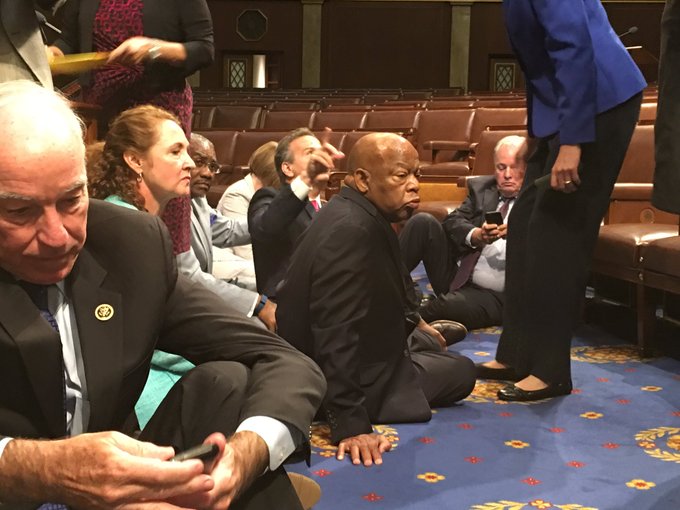


 Scraping my life right now feels like part of that kind of foggy transition. I begin to see the deposits on my counter like deposits of the past on my soul, dried up relationships that feel like scars, dried up work that left a mark, memories of goodness that are fading. For some reason, the old slogan of the much-maligned
  Americans are having a tough time living by any rules at all when it comes to the pandemic. As usual we’re dividing up over something as simple as whether wearing a mask is necessary. I know what I am about to say might not be true about you (at least I hope not), but as a society, the individual freedom to kill seems to be trumping our responsibility to save. As a society, the Americans perfected the world’s largest killing machine — their arsenals and armed “services;” I don’t think anyone would dispute that violence is a core characteristic of the U.S.A. But that trait characterizes the people as individuals, too. The society is debating whether policing means the right to make split-second decisions to kill Black people, especially, and whoever else challenges state-sponsored violence. We’ve been debating whether everyone should be allowed to carry weapons into Walmart. The wild Mixed Martial Arts (MMA) is more popular in the U.S. than the NHL or NASCAR among 18-34 year-olds. All this goes to say that Americans lean toward lawlessness when it comes to relating to anyone but their small circle, and white people, especially, tend to think death is “collateral damage” when it comes to protecting their way of life.


 Clothed with a new character. The story of Pentecost continues in Acts 2 and the whole book, to show that once touched by fire, the new church immediately expresses their new life with new behavior. Paul sums up the change like this in Ephesians 4: “You were taught, with regard to your former way of life, to put off your old self, which is being corrupted by its deceitful desires; to be made new in the attitude of your minds; and to put on the new self, created to be like God in true righteousness and holiness.” We always hear a challenging voice somewhere inside us saying, “So what are you going to do?”

 I have talked to clients, both in psychotherapy and spiritual direction, who look me in the eye and say, “I am sorry for wasting your time.” That’s always interesting to talk through, but still tragic whenever I hear it. It’s like they spent enough time in a safe place to realize they don’t think they matter – mainly because they have a hard time accepting they matter to me. They don’t have enough evidence our time together matters even though I think it does. They don’t think they are changing enough to deserve therapy or coming up to a standard that deserves direction. What is their “I am” statement? – “I am a waste of time.”

 Binary comparisons are more fun than accurate. So let’s avoid forming too many conclusions and let the reality sink in. We are all probably leaning into one of these camps most of the time.